

Pros and Cons of Concrete Countertops vs. Granite and Marble Countertops
In this post you will learn the differences between 3 famous countertop materials, Marble, granite and concrete. We hope you will find this article entertaining.
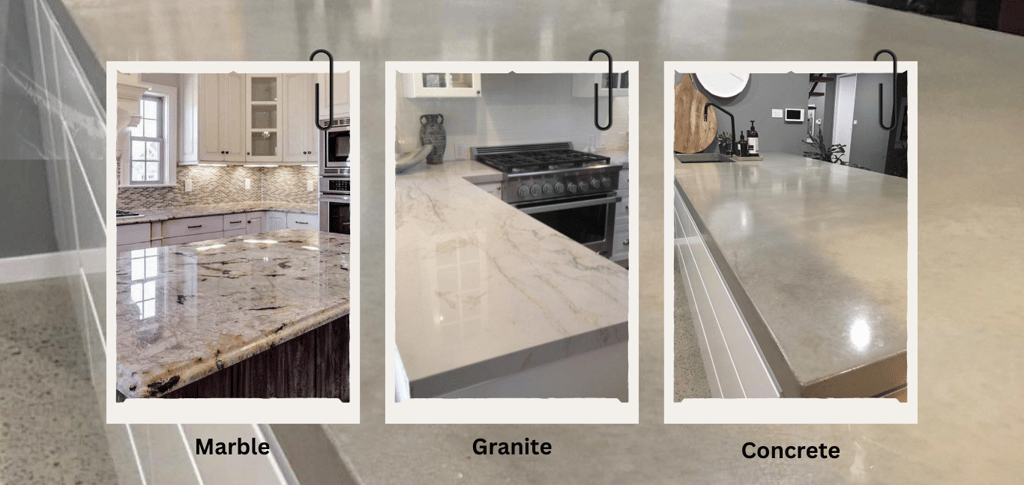

Concrete countertops have gained popularity in recent years as a unique and versatile option for kitchen and bathroom surfaces. While granite and marble countertops have long been the go-to choices for homeowners, concrete countertops offer a distinct aesthetic appeal and a range of advantages. However, it is important to consider the pros and cons of each material before making a decision. In this article, we will explore the pros and cons of concrete countertops compared to granite and marble countertops.
Pros of Concrete Countertops:
Customization: One of the biggest advantages of concrete countertops is their ability to be customized. Concrete can be molded into any shape or size, allowing for unique and personalized designs. It can also be stained or pigmented to match any color scheme, giving homeowners greater flexibility in achieving their desired look.
Durability: Concrete is a highly durable material that can withstand heavy use and resist scratches and heat. When properly sealed, concrete countertops are resistant to stains and water damage, making them suitable for high-traffic areas such as kitchens.
Versatility: Concrete countertops can be designed to mimic the appearance of other materials, such as granite or marble, at a fraction of the cost. This versatility allows homeowners to achieve the desired aesthetic without breaking the bank.
Cons of Concrete Countertops:
Maintenance: While concrete countertops are durable, they do require regular maintenance to keep them in optimal condition. Sealing the surface periodically is necessary to prevent staining and water damage. Additionally, concrete countertops may develop hairline cracks over time, although these can be repaired.
Porosity: Concrete is a porous material, which means it can absorb liquids if not properly sealed. This can lead to staining and bacterial growth if spills are not cleaned up promptly. However, with the right sealant and regular maintenance, this can be mitigated.
Pros of Granite and Marble Countertops:
Natural Beauty: Granite and marble countertops are prized for their natural beauty and unique patterns. These materials offer a timeless and elegant look that can enhance the overall aesthetic of any space.
Heat Resistance: Granite and marble are naturally heat-resistant, making them ideal for kitchens where hot pots and pans are frequently placed on the countertops. They can withstand high temperatures without being damaged or discolored.
Cons of Granite and Marble Countertops:
Cost: Granite and marble countertops tend to be more expensive than concrete countertops. The price can vary depending on the quality and rarity of the stone, making them a less budget-friendly option for some homeowners.
Maintenance: Granite and marble countertops require regular sealing to prevent staining and damage. They are also more prone to scratches and chips compared to concrete countertops.
In conclusion, concrete countertops offer a unique and customizable option for homeowners seeking a modern and versatile surface. They provide durability, customization options, and cost-effectiveness. On the other hand, granite and marble countertops offer natural beauty and heat resistance but come with a higher price tag and require more maintenance. Ultimately, the choice between these materials depends on personal preference, budget, and the desired aesthetic for your space.



Stay connected